
The excitement of purchasing premium villa plots in a rapidly appreciating locale like the Chennai South Corridor is palpable. Developments like Growth town offer the promise of an “Enchanting Address” and significant returns, making near Padalam Junction plots highly sought after. While the Sale Deed is undoubtedly the cornerstone of property ownership, a smart buyer knows that true due diligence extends far beyond this single document.
To secure your investment in Growth town Padalam and ensure a hassle-free future for your community plots, there are three other critical documents that absolutely must be verified. Overlooking these can lead to legal complications, financial losses, and endless headaches.
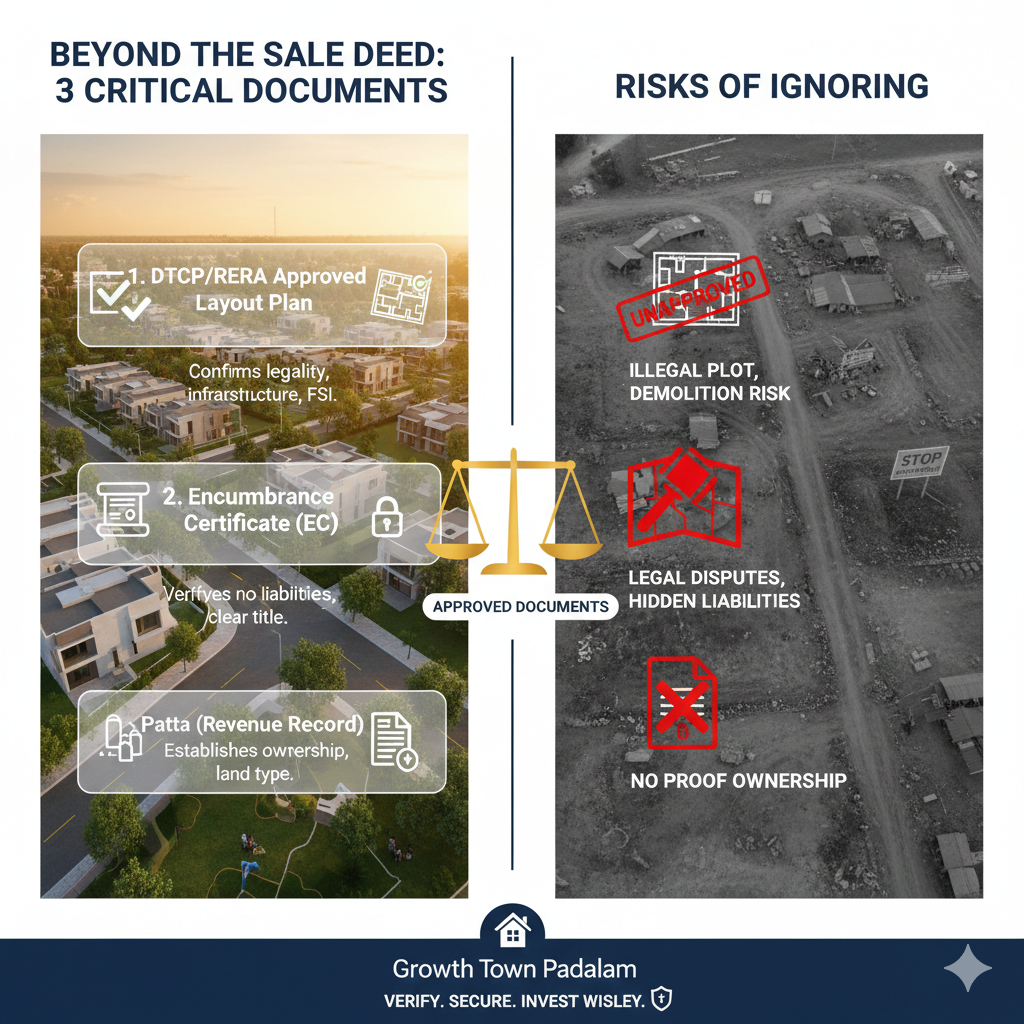
1. The Approved Layout Plan (DTCP/CMDA Approval)
This is arguably the most crucial document after the Sale Deed itself, especially for premium villa plots. An Approved Layout Plan (from either the Directorate of Town and Country Planning – DTCP, or the Chennai Metropolitan Development Authority – CMDA, depending on the jurisdiction) is the official sanction that converts agricultural land into residential plots.
Why it’s Critical:
- Legality of the Plot: This document confirms that the plots within the layout (like those in Growth town) are legally permissible for residential construction. Without this, your purchase could be an unauthorized plot, susceptible to demolition or government acquisition without compensation.
- Infrastructure Assurance: The approved plan details the proposed roads, open spaces, parks, and other amenities within the community plots. It guarantees that the developer is bound to provide these facilities as per the approved design.
- FSI and Building Regulations: It outlines the Floor Space Index (FSI) and other building regulations applicable to each plot, informing you about the maximum permissible construction.
- Road Widths and Common Areas: It certifies the width of internal roads and the demarcation of common areas (parks, civic amenities) that cannot be encroached upon or built over.
What to Verify:
- Cross-check the plot number and dimensions on the layout plan with those on your Sale Deed.
- Ensure the approval number and date are genuine and from the correct authority.
- Physically inspect the site to confirm that the layout’s development (roads, boundaries) aligns with the approved plan. Developers like Growth town Padalam will readily provide this for verification.
2. The Encumbrance Certificate (EC)
The Encumbrance Certificate is a vital legal document that confirms a property is free from any monetary or legal liabilities such as mortgages, leases, or other charges. It is essentially a record of all transactions (sales, gifts, mortgages, etc.) that have occurred on a property over a specific period.
Why it’s Critical:
- Clear Title Confirmation: An EC is proof that the property (your near Padalam Junction plots) has a clear and marketable title and is free from any previous legal claims or financial burdens.
- Detecting Hidden Liabilities: It reveals if the land was mortgaged by the previous owner, if there are any pending legal disputes, or if it was leased out. A clean EC assures you that you are buying the property free of any such encumbrances.
- Avoiding Future Disputes: Without a clean EC, you could inherit liabilities from previous owners, leading to protracted legal battles and financial loss.
What to Verify:
- Request an EC for at least the past 30 years (or even longer if possible).
- Ensure the EC covers the specific survey number and sub-division number of your premium villa plot.
- Verify that the names of the sellers (and previous owners) match the records and that there are no unauthorized transactions.
3. The Patta (or Chitta/Adangal)
The Patta is a revenue record that denotes the ownership of land. While the Sale Deed establishes legal ownership, the Patta indicates who holds the primary record in government revenue books. In some cases, it also includes details about the land’s area, type (wetland/dry land), and survey number.
Why it’s Critical:
- Revenue Record Ownership: A Patta confirms that the land is recorded in the government’s revenue department in the name of the seller. This is particularly important for standalone community plots.
- Proof of Possession: While not a title document, it’s strong evidence of ownership and helps prevent disputes over possession and property tax payments.
- Agricultural to Non-Agricultural Land Conversion: For plots converted from agricultural land, the Patta ensures this conversion has been legally recognized and documented.
What to Verify:
- Ensure the name on the Patta matches the seller’s name.
- Confirm the survey number and plot dimensions on the Patta align with the Sale Deed and the Approved Layout Plan.
- For premium villa plots in a developed layout like Growth town Padalam, ensure the Patta is for the parent land and that the developer has a clear title to subdivide.
Conclusion
While the Sale Deed transfers ownership, these three documents—the Approved Layout Plan, the Encumbrance Certificate, and the Patta—collectively paint a complete picture of your property’s legal health. By meticulously verifying each of these, buyers of Chennai South Area plots can move forward with confidence, transforming their investment in Growth town from a mere purchase into a truly secure and valuable asset.